
The Final Step: Nipple Reconstruction & 3D Tattooing
Expert insight from Lauren Whipple, MD

Breast reconstruction after mastectomy is a deeply personal journey… one that takes courage, resilience, and patience. For many women, the process involves multiple surgeries, months of healing, and a gradual reimagining of their bodies. But there is often one final step that women either don't know about, underestimate, or decide to skip — and it may be the most emotionally powerful of all: nipple reconstruction and 3D areola tattooing.
At PRMA Plastic Surgery, Board-Certified Plastic Surgeon Dr. Lauren Whipple works with women at every stage of breast reconstruction. She's witnessed, firsthand, how this final step can transform not just the look of a reconstructed breast, but how a woman feels in her own body.
And for women who are already at this stage of their journey — or considering how 3D nipple tattooing plays into the complete picture — we want to walk you through what this process looks like, why it matters, and why so many women describe it as the moment everything finally felt whole.
Why the Nipple Changes Everything
You've been through surgery. You've healed. You look at your new breast and it looks... good. And yet something still feels off when you look in the mirror.
Dr. Whipple explains it this way:
"A lot of women have said to me — no, I don't think I need to do 3D tattooing, I don't need any areola or any nipple. And from what I've seen with women is that you kind of feel like this new breast is a blank slate and it's not really your breast until you look in the mirror and you see the nipple."
The nipple is, quite literally, how we identify our breasts as our own. It's the focal point — the detail that signals, on a deep psychological level, that this is you. For many women, it's the moment reconstruction truly feels complete.
That said, this isn't a one-size-fits-all experience. Some women choose artistic tattoos over their mastectomy scars and feel completely empowered by that choice. Dr. Whipple celebrates that, too. But for women who want their reconstructed breast to look and feel as natural as possible, nipple reconstruction and 3D tattooing is a meaningful and powerful option.
When Does Nipple Reconstruction Happen?
Breast reconstruction typically takes place in two phases:
Phase 1 is the initial reconstruction — rebuilding the breast mound after mastectomy using either an implant or a flap technique (such as a DIEP flap or thigh flap).
Phase 2 is the refinement stage. According to Dr. Whipple,
"The second is really just a refinement surgery — either placing a final implant, or if you had a DIEP flap or a thigh flap, refining the volume, doing some fat grafting to improve symmetry between the breasts."
It's at this Phase 2 point that nipple reconstruction, if desired, typically takes place. Once a patient has healed from that second surgery (approximately three months later), the 3D tattooing process can begin.
Two Paths: Projected Nipple or 3D Tattoo?
When it comes to nipple reconstruction, there are two main options:
Option 1: Projected Nipple Reconstruction (Surgical)
A small, raised projection of skin is surgically created at the center of the breast mound — mimicking the natural protrusion of a nipple. This is a relatively minor procedure, but it does result in a physical bump that remains visible through clothing.
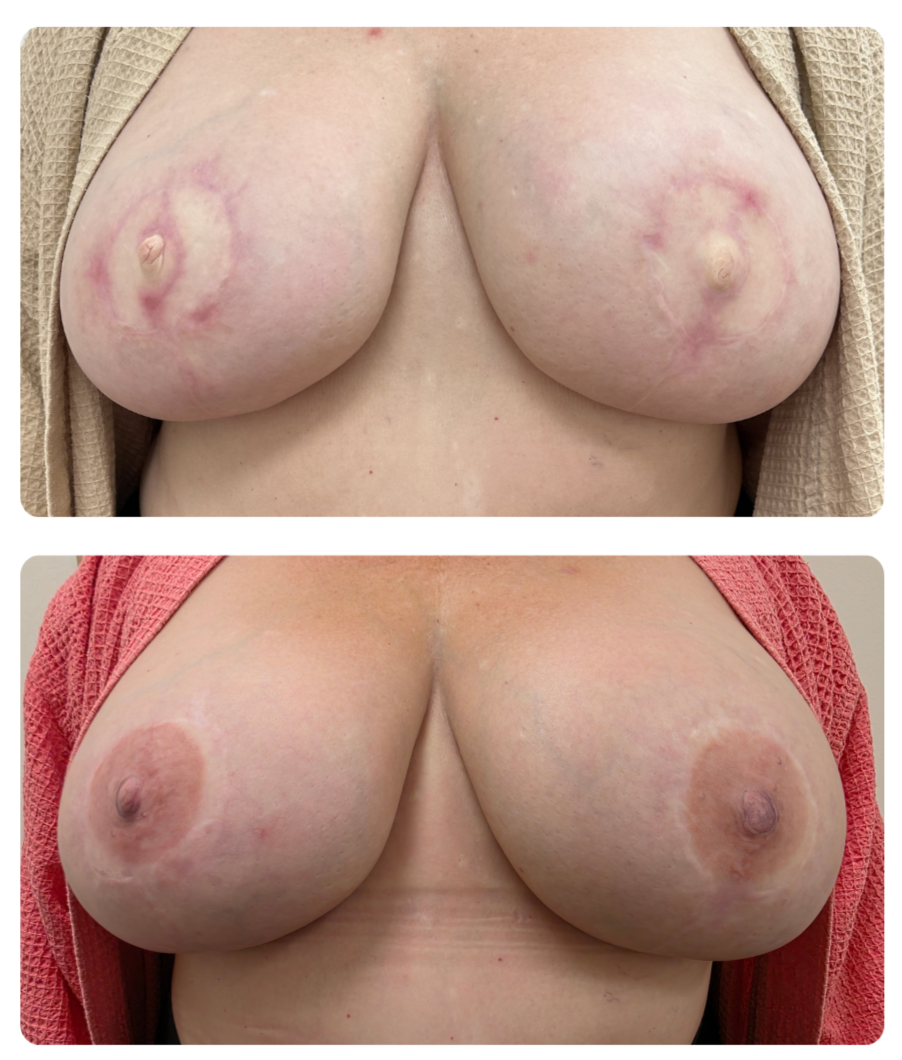
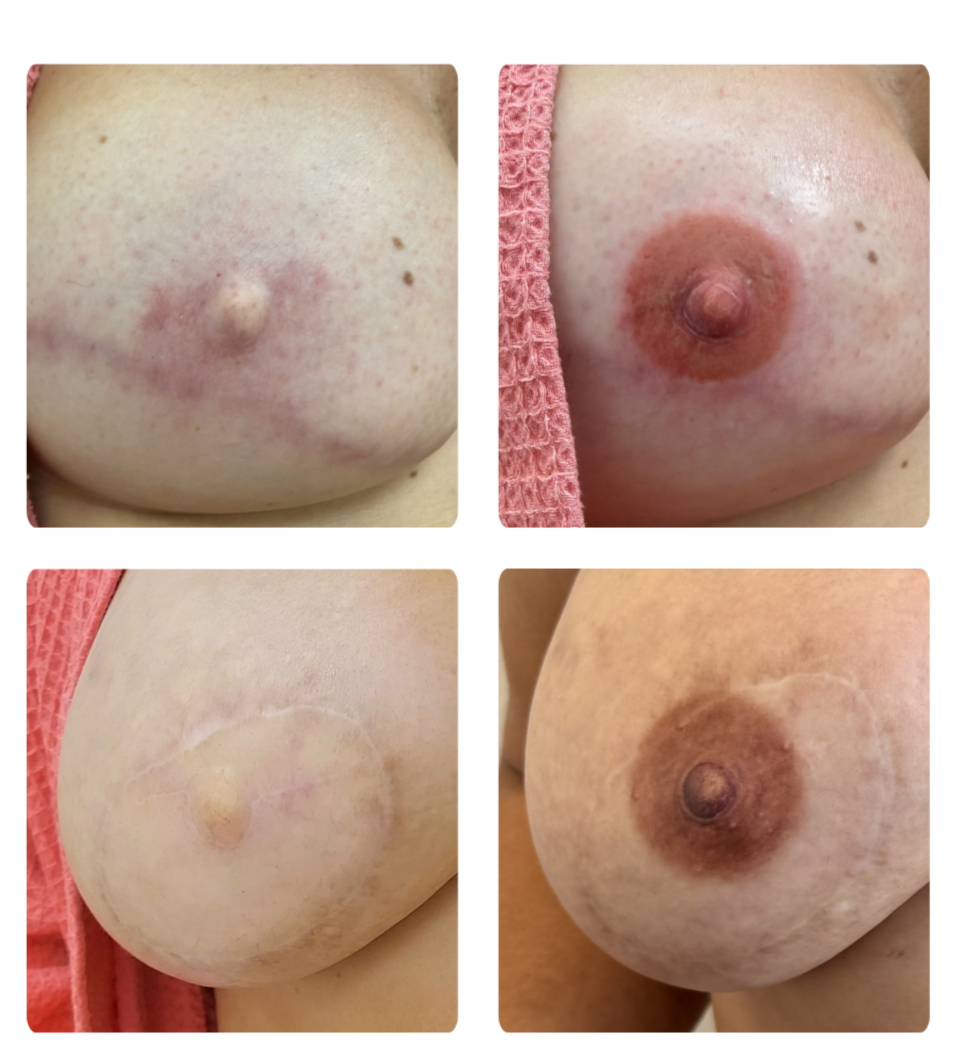
Option 2: 3D Areola Tattooing (No Projection)
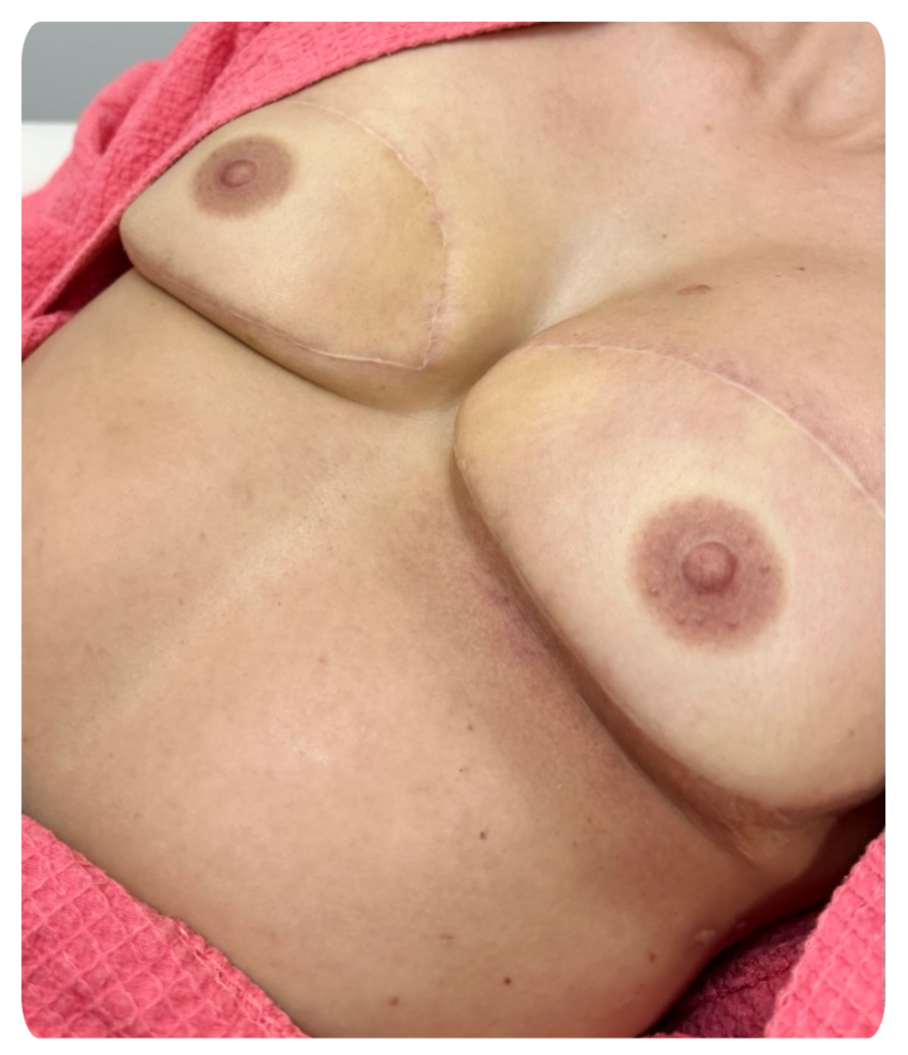
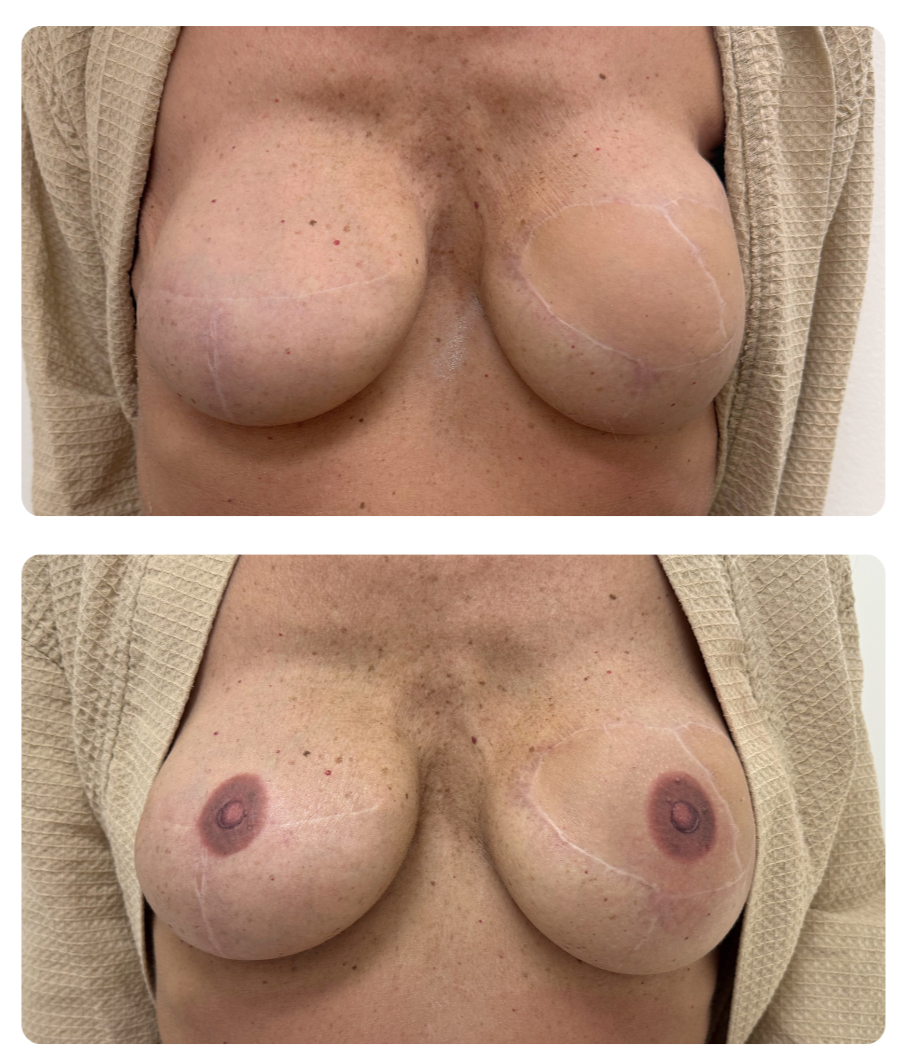
Rather than surgical reconstruction, a skilled medical tattoo artist uses advanced shading and color techniques to create the illusion of a nipple and areola — completely flat against the skin, but remarkably realistic. The depth, shadow, and color work together to create a three-dimensional appearance.
Here's a perhaps surprising statistic: Dr. Whipple shares that approximately 90% of her patients choose the 3D tattoo route over a projected nipple. The reason? Lifestyle and freedom.
"The majority of women kind of enjoy the fact that they don't have to wear a padded bra, or they can wear a sheer top, or they don't even have to wear a bra after undergoing a mastectomy and reconstruction. And if they were to get a projected nipple in the center, sometimes they feel like they would have to cover that up in clothing."
The trend toward 3D-only tattooing has only grown over recent years, and it reflects the real priorities of women coming out of reconstruction — they want to feel natural, comfortable, and free.
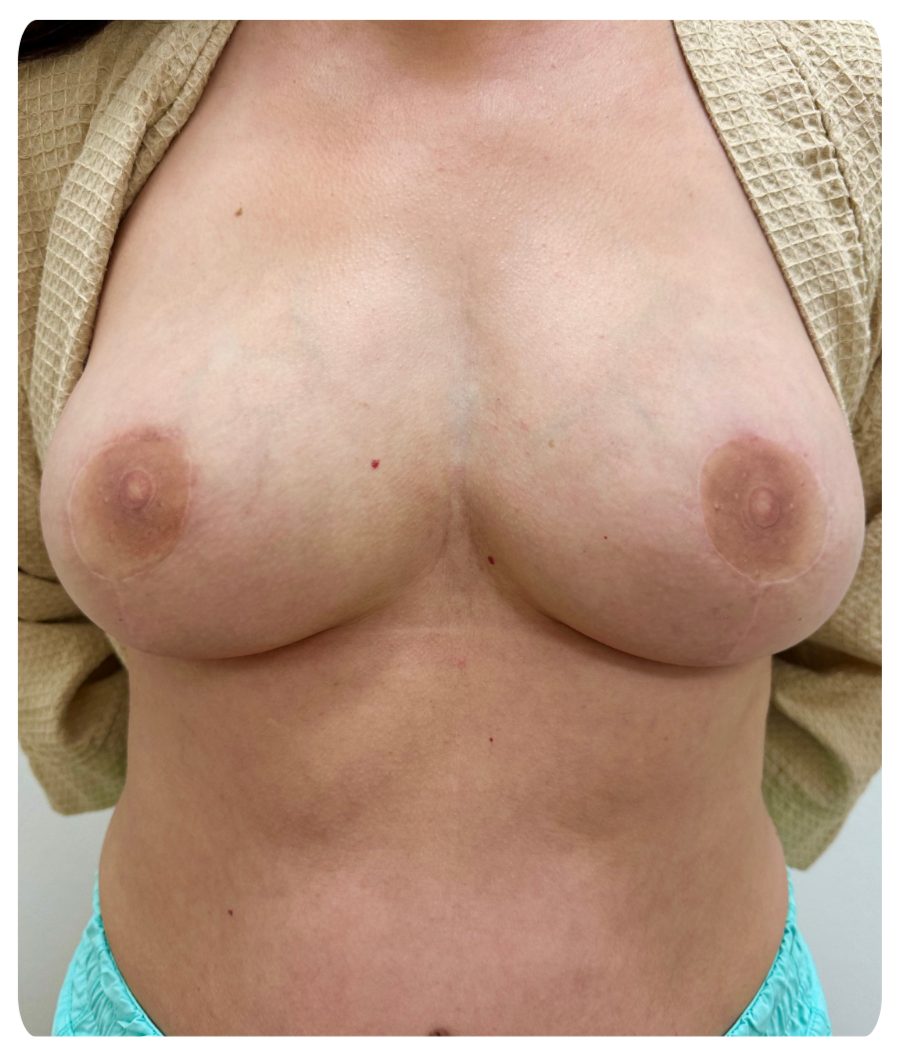
The Art of 3D Nipple Tattooing
This is where our team comes in — and where we see the final transformation happen.
As Dr. Whipple mentioned, 3D nipple and areola tattooing is not conventional tattooing. It is a specialized, highly technical form of medical tattooing that requires a deep understanding of anatomy, shading, color theory, and how pigment interacts with reconstructed skin.
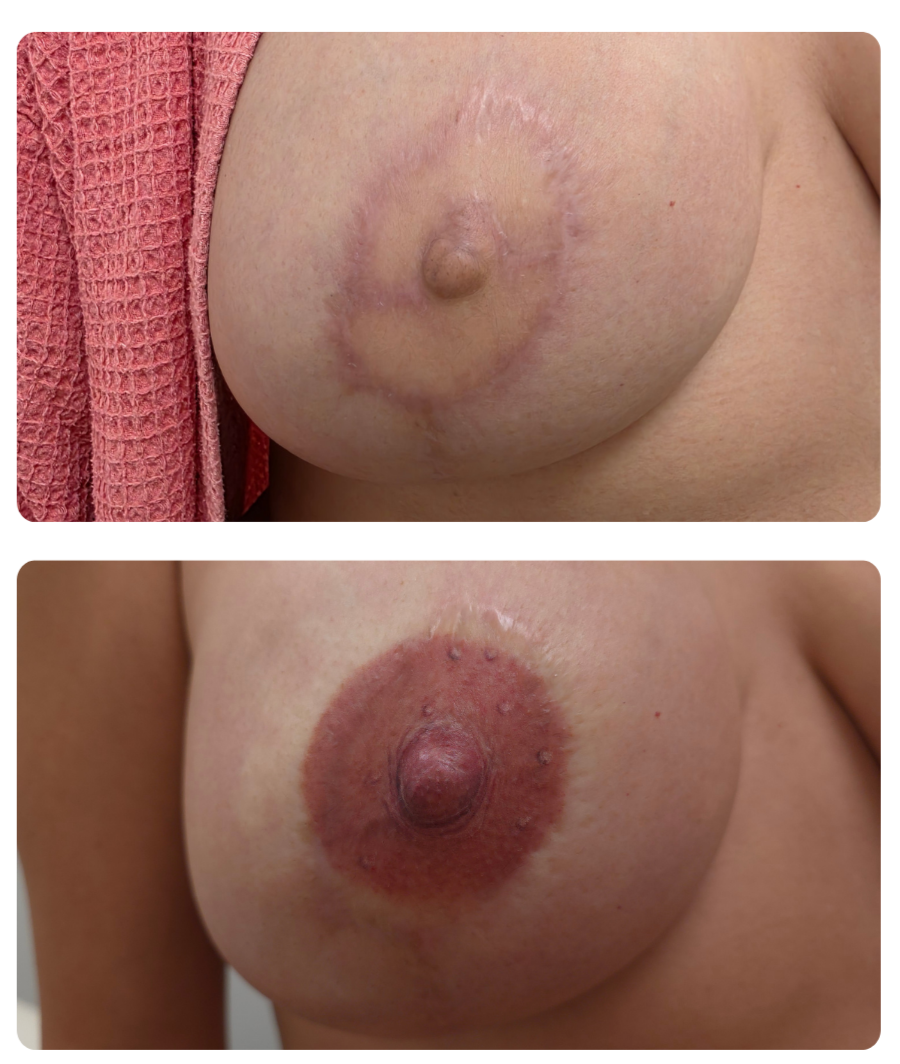
Tattooing After Nipple Reconstruction:
For women who have undergone nipple bud reconstruction (the surgical projection), we work around that bud — designing the areola to complement its shape and size, then tattooing the surrounding tissue with carefully selected pigments and shading. The goal is to ground the bud visually and give it the natural color variation and dimension that makes it look like a real nipple.
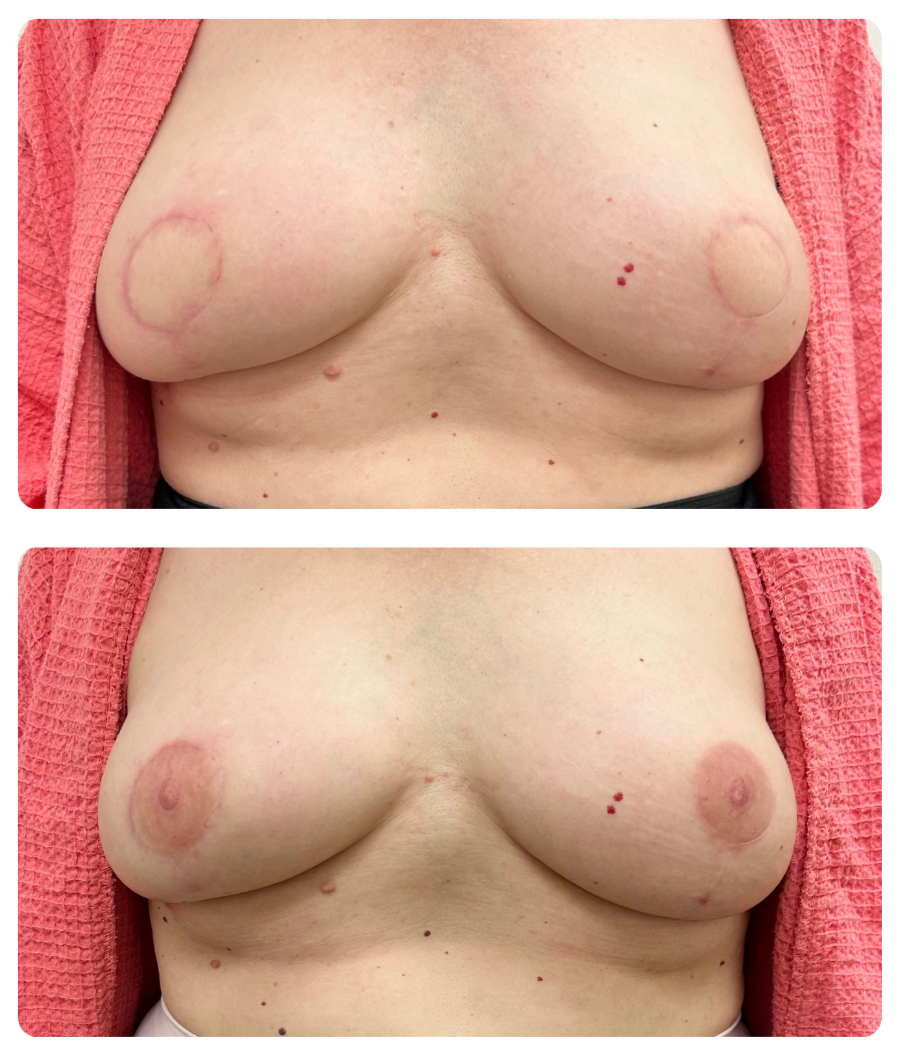
Tattooing On Flat Skin:
For women who opt for flat 3D tattooing (no projection), the work is entirely about illusion. Using layered pigment, strategic highlights, and deep shadow work, we create a design that reads as three-dimensional from virtually every angle and lighting condition. The result, when done well, is remarkably realistic — something that consistently stops women in their tracks when they look in the mirror.
Color Matching & Areola Design
One of the most important aspects of this work is color. Areola pigmentation is incredibly varied — ranging from pale pink to deep brown — and finding the right match for each patient's skin tone, the color of their remaining breast (if applicable), and their personal aesthetic preferences takes skill and experience.
We take the time to:
Assess natural skin undertones
Consider the patient's other breast for bilateral symmetry when possible
Mix and layer pigments to create depth and natural variation — because real areolas are never just one flat color
Design the areola shape proportional to the breast and chest wall
No two tattoos are identical. Each one is a custom piece of work, tailored to that woman's body and what will look most natural and beautiful for her.
To learn more about what to expect at your first nipple tattooing session, click here: The Perk Up: Your 1st Nipple Tattoo Session.
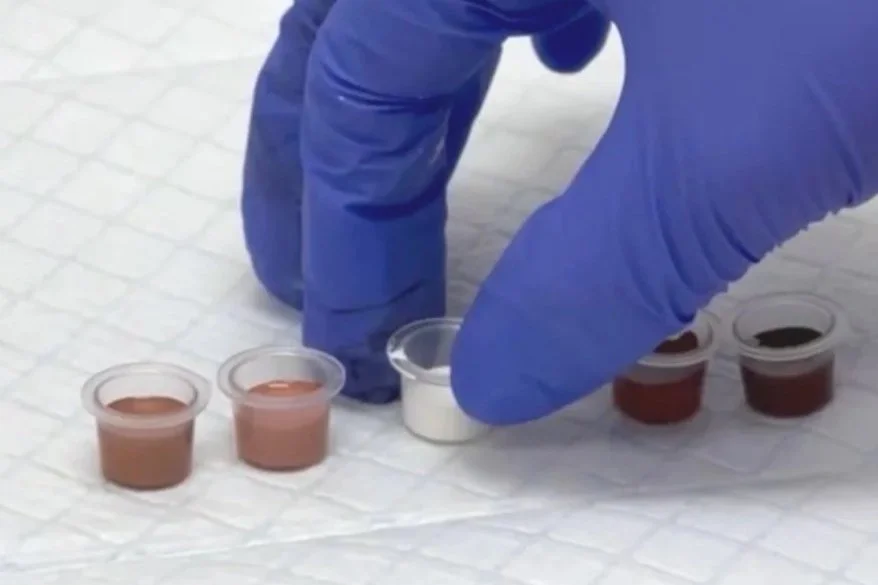
Healing and Touch-Ups
Like all tattoos, 3D nipple tattoos require a healing period. Pigment will fade somewhat in the first few weeks as the skin heals — this is completely normal and expected. A touch-up appointment is typically scheduled 6–8 weeks after the initial session to refine color, deepen shading where needed, and ensure the final result is as realistic as possible.
Why This Step Matters — More Than You Might Expect
Dr. Whipple sums it up well:
"I have seen a dramatic change in how women kind of feel whole again after they go through the 3D areola nipple tattooing process."
We've seen it too — over and over again. Women who walked into our studio unsure of what to expect and walked out crying happy tears. Women who said they'd been avoiding mirrors for months and finally feel like themselves.
This is restoration. It's the final chapter of a long and hard journey — and it deserves to be done with care, artistry, and deep respect for what each woman has been through.
If you're at this stage in your reconstruction journey, or if you're just beginning to research your options, we encourage you to reach out. We'd love to talk through what's possible, share examples of our work, and help you take this last step toward feeling fully, beautifully, powerfully yourself again.
A special thank you to Dr. Lauren Whipple at PRMA Plastic Surgery for sharing her expertise and her compassion for her patients.
