
— and How Tattooing Can Help

How Surgeons Create a Reconstructed Nipple
For patients who choose nipple reconstruction after breast reconstruction, plastic surgeons typically create a small raised “nipple bud” using the patient’s own skin from the reconstructed breast. The most common surgical techniques—such as the C-V flap, skate flap, or star flap—involve lifting and folding small flaps of skin and underlying tissue to form a projecting structure that resembles a natural nipple. Because surgeons know the nipple will lose height during healing, they often intentionally create the nipple larger or taller than the desired final result to compensate for the expected loss of projection over time.¹
Unlike a natural nipple, which contains specialized connective tissue structures that help maintain shape, a reconstructed nipple is primarily made of skin and soft tissue. As a result, its long-term structure relies heavily on the healing process and the quality of the surrounding reconstructed breast tissue.
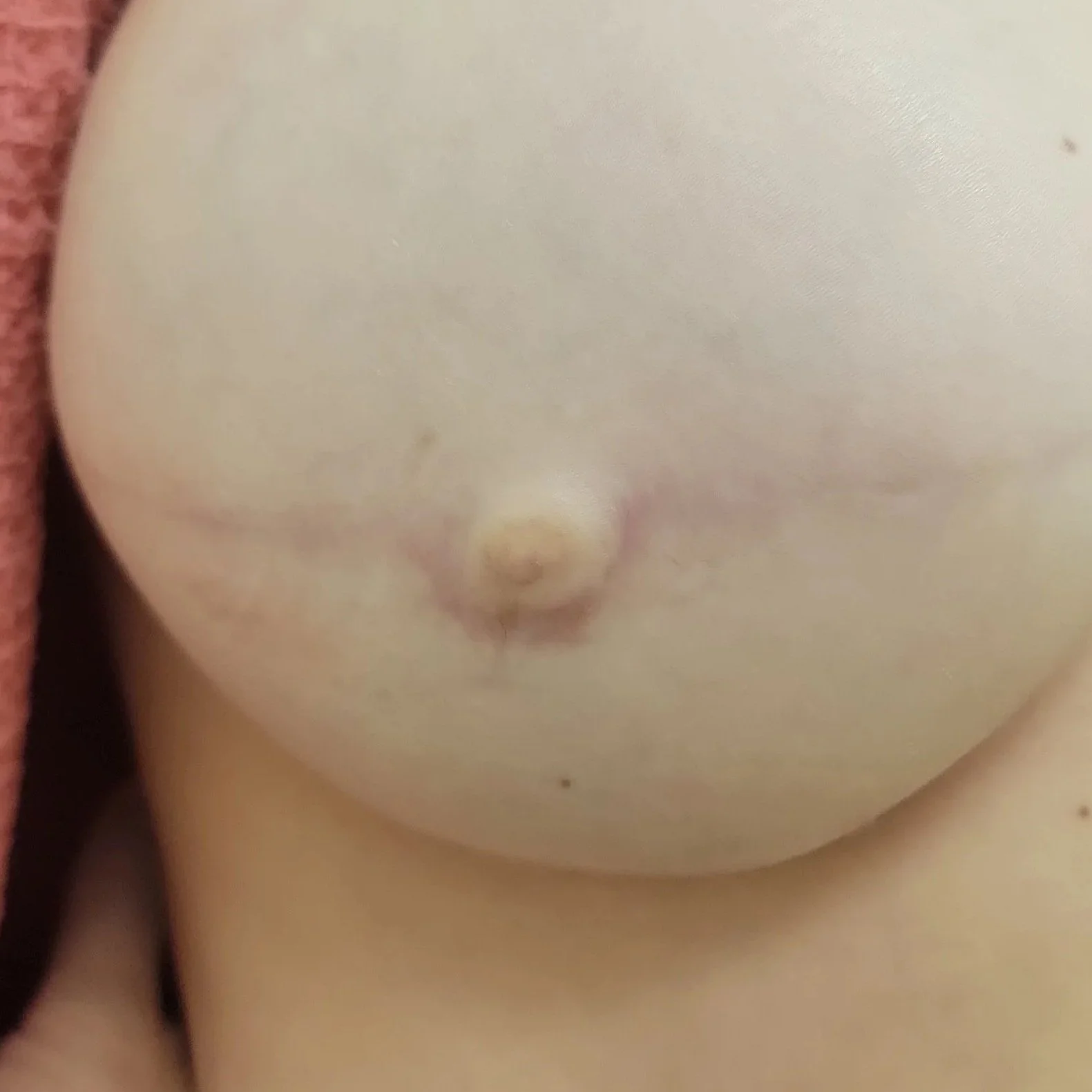
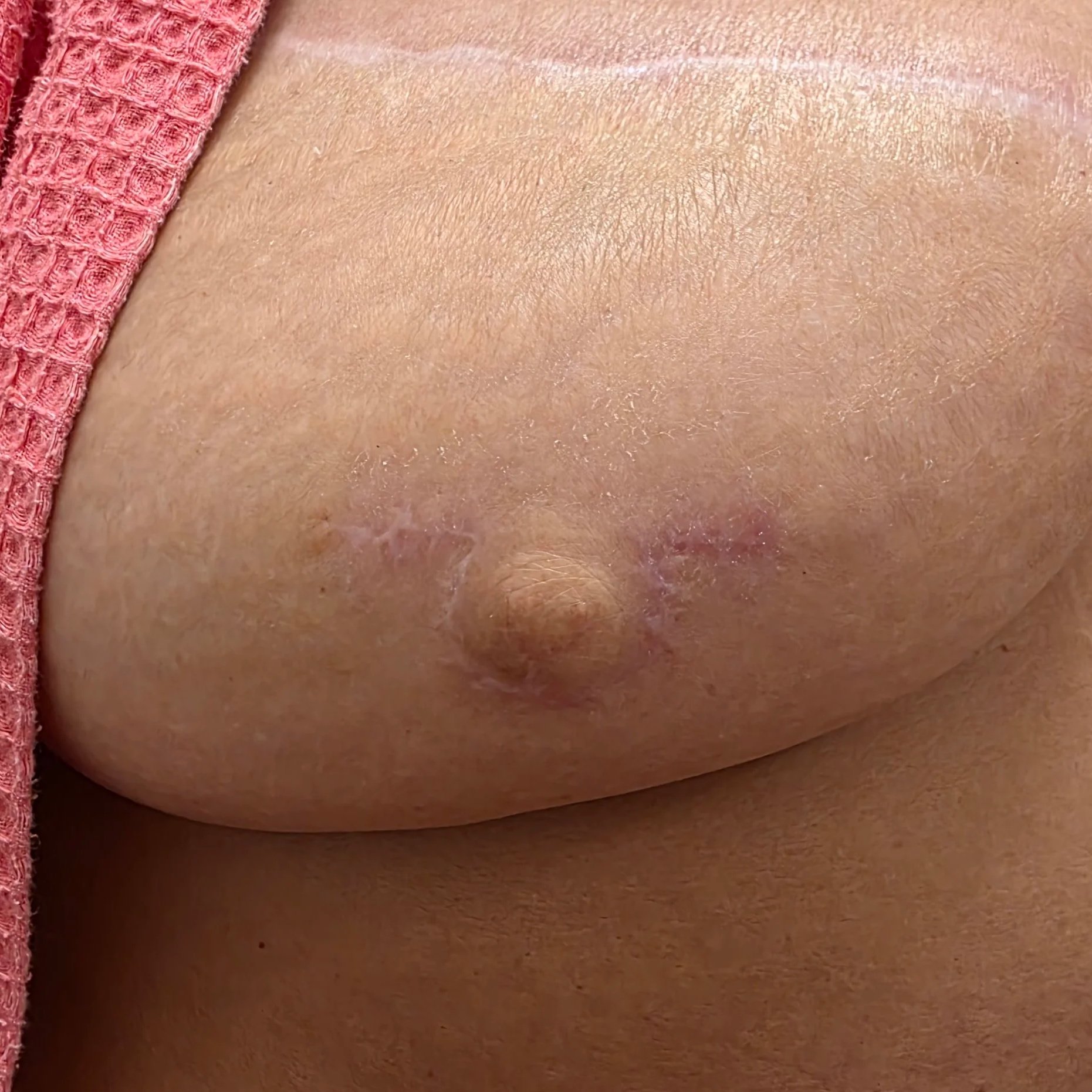


Why Reconstructed Nipple Buds Often Flatten
Loss of projection (ie flattening) is one of the most common and well-documented challenges of nipple reconstruction. Studies have shown that reconstructed nipples can lose between 40% and 75% of their initial projection within the first six months after surgery, with the most significant flattening occurring during the early healing period.² Because of this predictable change, surgeons frequently design the nipple to be 25–50% taller initially to account for the anticipated reduction in height.¹
Several biological factors contribute to this flattening. During healing, scar contraction naturally pulls tissues inward, which can reduce the height of the reconstructed nipple. Additionally, the small amount of fat used to create projection may partially resorb over time. The reconstructed breast environment can also influence long-term projection—particularly in patients with implant-based reconstruction, radiation therapy, or thinner skin flaps. External pressure from clothing or normal daily activities can also gradually compress the reconstructed nipple.²
Because healing is rarely perfectly symmetrical, it is also common for reconstructed nipples to settle or flatten unevenly, leading to differences in projection or position between breasts. While surgeons aim to create symmetry during reconstruction, the healing process can produce subtle—or sometimes noticeable—differences over time.
To learn more about nipple reconstruction from San Antonio-based board-certified plastic and reconstructive surgeon, Dr. Ramon Garza III, click the button below:
Patient Satisfaction After Nipple Reconstruction
Despite the potential for flattening or asymmetry, nipple reconstruction remains an important step for many breast cancer survivors. Research has consistently shown that restoring the nipple–areola complex can significantly improve body image, feelings of completeness, and overall satisfaction with breast reconstruction.³ In fact, some studies report that patients who complete nipple reconstruction and areola tattooing experience higher long-term satisfaction with their reconstructed breasts compared to those who do not undergo the final stage of reconstruction.⁴
However, loss of projection and asymmetry are among the most common reasons patients seek revision procedures or corrective tattooing later on. Fortunately, modern restorative tattooing techniques can often help visually improve symmetry and restore a more natural appearance—even many years after the original reconstruction.
The Role of Nipple–Areola Tattooing in Final Reconstruction Outcomes
Even when nipple reconstruction surgery is successful, the final appearance of the nipple–areola complex often depends heavily on tattooing. While surgery can create the structure of a nipple, the color, depth, and visual realism of the nipple–areola complex are often achieved through pigmentation. Ultimately, tattooing plays an important role in the final aesthetic outcome of breast reconstruction.
Advances in tattooing techniques have allowed artists to create highly natural results using layered color and shading to mimic the appearance of a three-dimensional nipple and areola. Research has shown that specialized tattooing techniques can significantly improve the overall aesthetic appearance of reconstructed breasts and contribute to patient satisfaction with the final stage of reconstruction.⁵
In some cases, tattooing can also be used to improve symmetry, refine shape, and restore natural-looking color—especially for patients whose surgical results have changed over time due to healing, fading pigment, or flattening of reconstructed nipple buds.
Furthermore, tattooing can also work with the anatomy that has developed over time. For example, when a reconstructed nipple flattens, strategic shading techniques can enhance the illusion of dimension while balancing the overall appearance of the breasts. Rather than trying to recreate surgical projection, restorative tattooing focuses on visual harmony and realism, which can be incredibly impactful for patients who have lived with asymmetry or faded results for years.
A Real Case: 17 Years in the Making
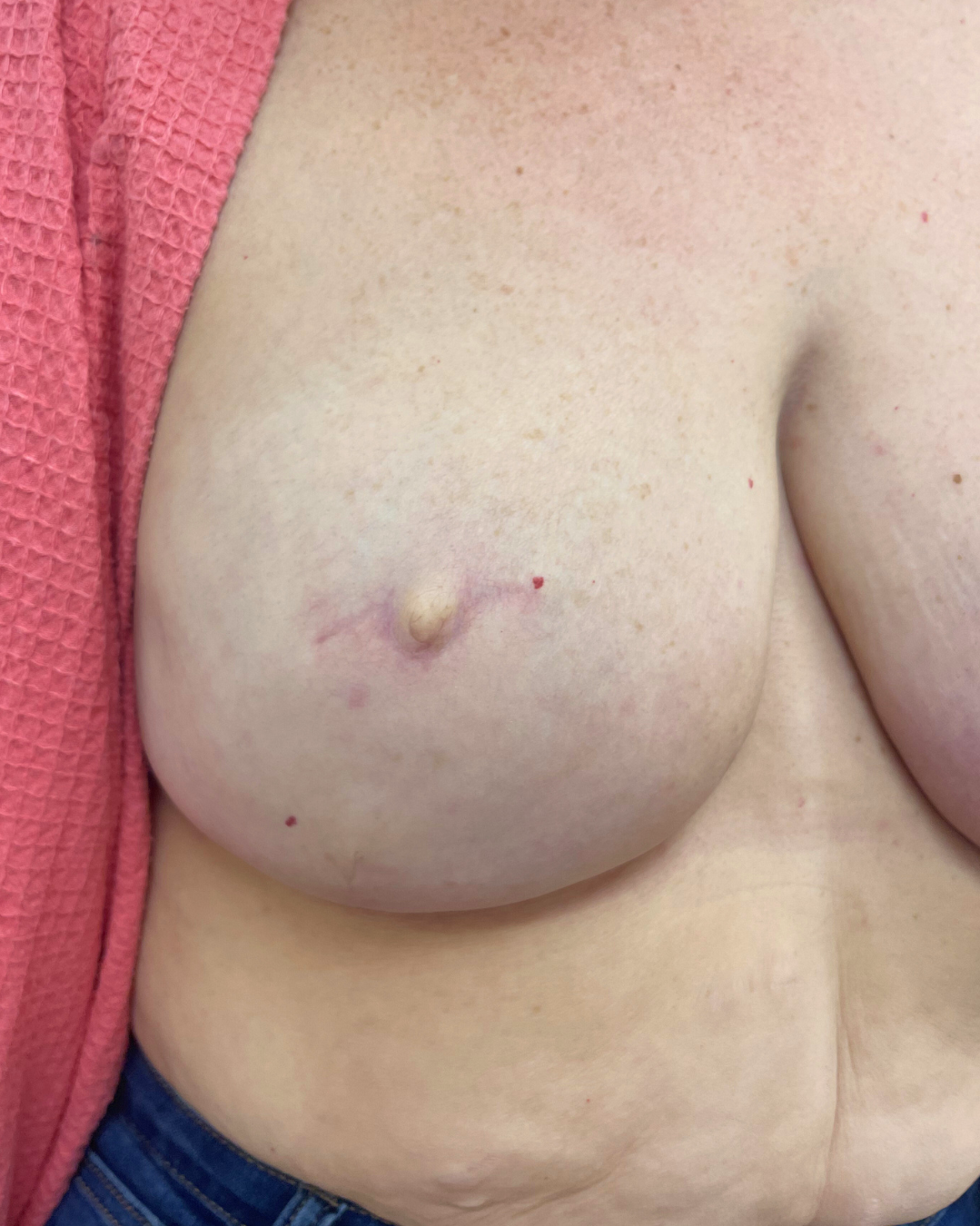
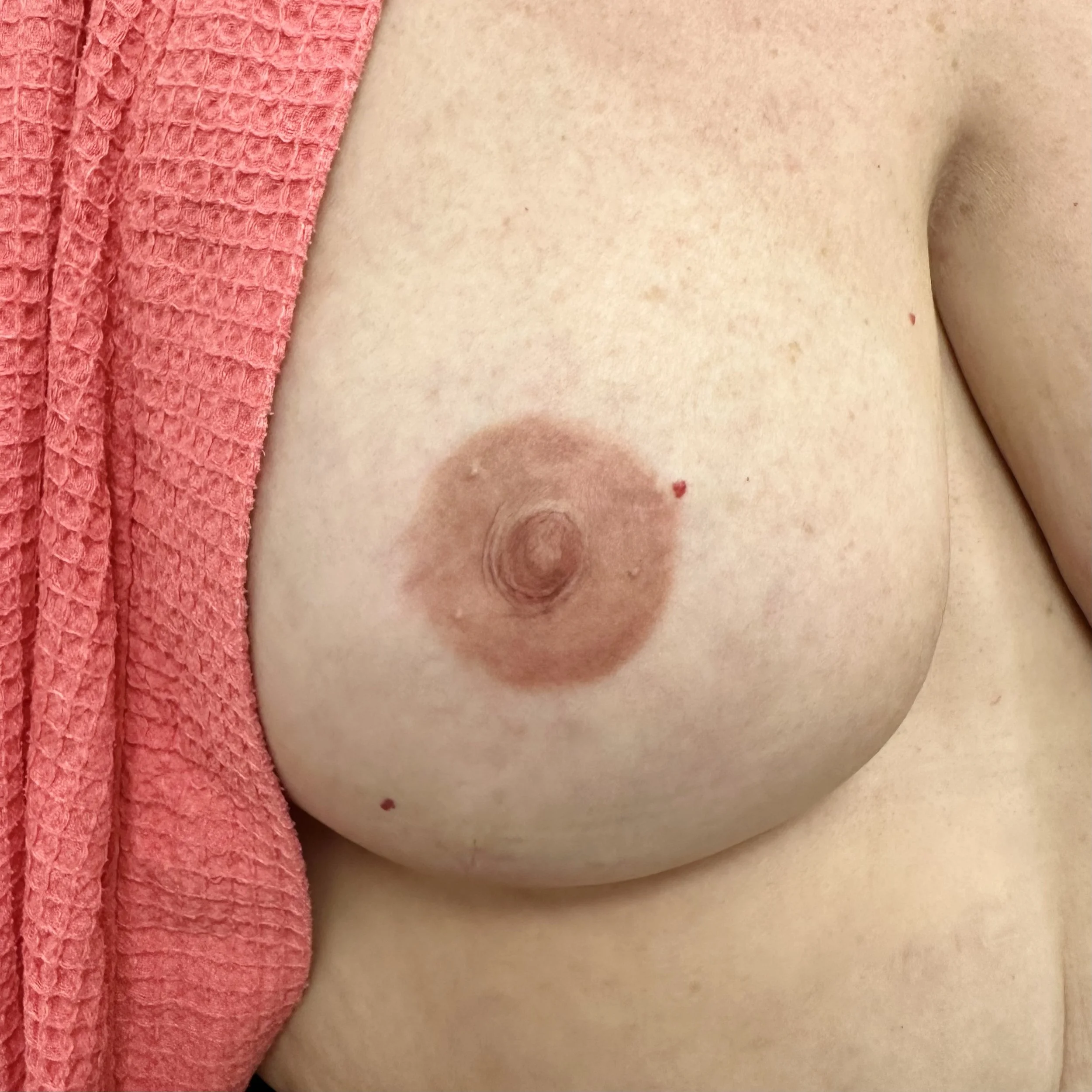
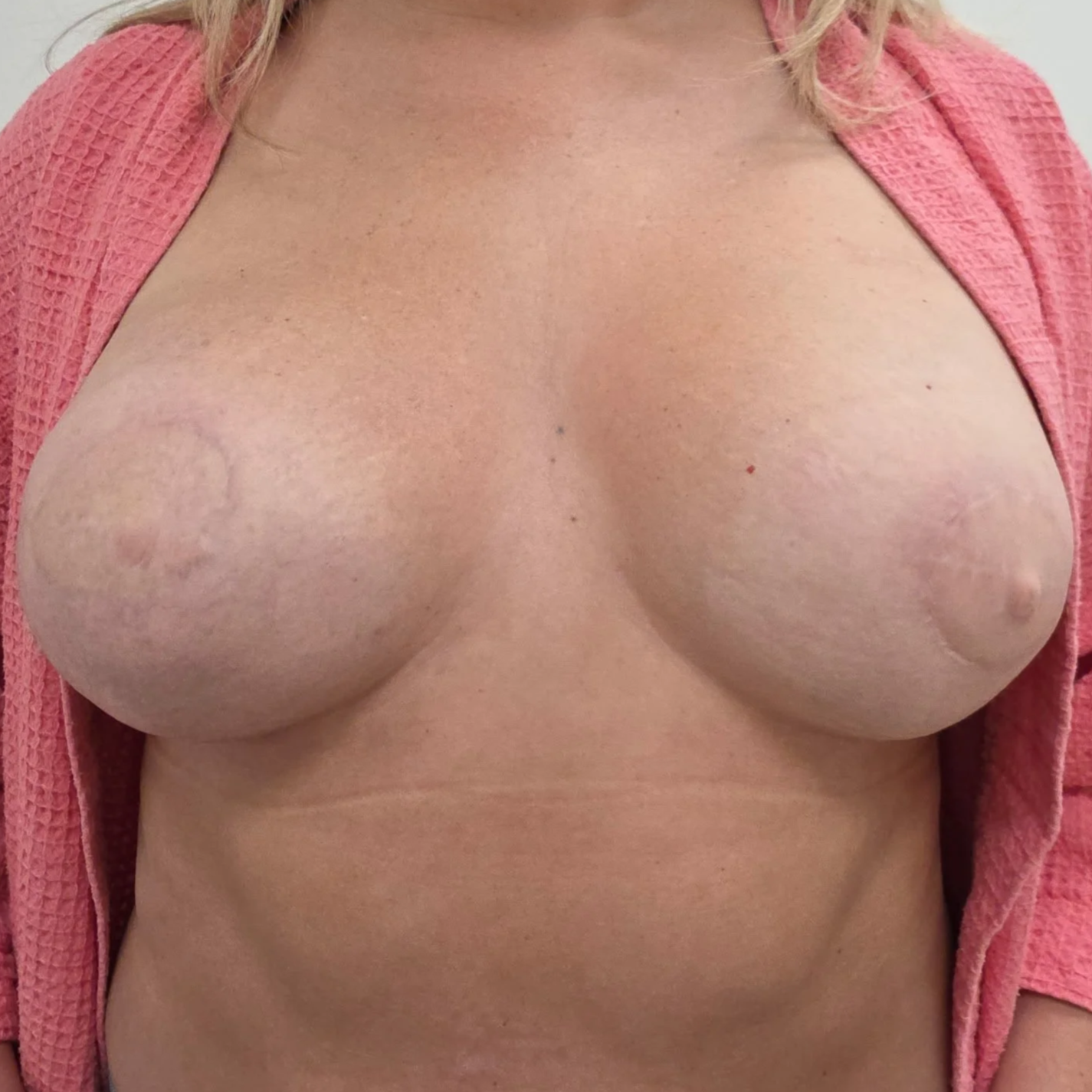
We recently worked with a patient who experienced several of these changes — nearly two decades after her reconstruction. This patient underwent breast reconstruction followed by nipple reconstruction with her plastic surgeon approximately 17 years ago.
At that time, she also received areola tattooing in the surgical office.
She experience the following:
One nipple bud flattened significantly during it’s initial healing 17 years ago
The nipple buds healed asymmetrically, with one sitting noticeably lower
The tattoo pigment faded almost completely
The remaining color appeared very warm and peach-toned
Like many survivors, she assumed this was simply the final outcome she would have to live with. But tattooing can often correct more than people realize.
Correcting Changes Years After Reconstruction
Breast reconstruction is often described as a final step in the cancer journey, but the reality is that the reconstructed breast continues to change over time. Nipple projection may flatten, surgical scars soften or shift, and tattoo pigment placed during the early stages of reconstruction can fade significantly over the years, especially depending on implantation techniques and the type of pigments used. For many survivors, these changes happen gradually, and they may not realize that improvements are still possible long after surgery.
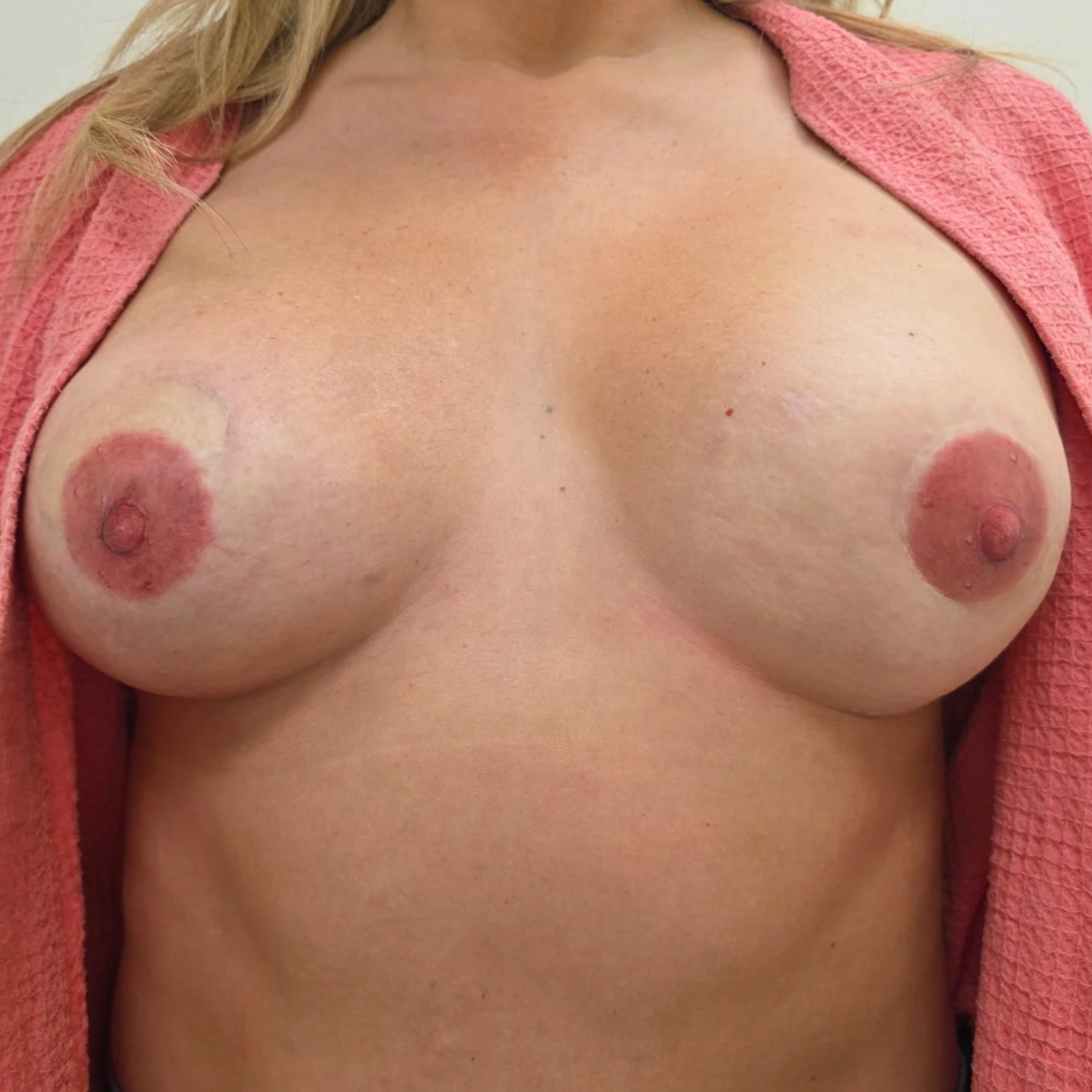
In the case highlighted in this article, the patient was 17 years post-mastectomy and reconstruction. Initially, one reconstructed nipple bud had flattened more than the other, and the two nipples healed at noticeably different heights. The original areola tattoo—performed shortly after reconstruction—had also faded significantly and healed into a warm peach tone that no longer matched the surrounding skin.
Through corrective areola tattooing, we were able to address several of these concerns at once. By carefully adjusting the placement, shape, and color of the areola, we visually improved the symmetry between the breasts while covering the faded pigment from the original tattoo. The flattened nipple bud, which might initially seem like a limitation, was actually used strategically to our advantage when creating a more balanced appearance.


It’s Never “Too Late” to Improve Results
Many breast cancer survivors believe that if their reconstruction or nipple tattoos were done years ago, nothing can be done to improve them. The reality is that, even years or decades after reconstruction, corrective nipple areola tattooing can often be performed. Even patients with:
faded pigment
uneven nipple placement
flattened nipple reconstruction
outdated tattoo color
may benefit from corrective nipple restoration.
Final Thoughts
Every reconstruction journey is unique, and not all results heal the same way. But even years later, restorative tattooing can offer another opportunity to improve symmetry, realism, and confidence. Correcting asymmetry you thought nothing could be done about can be life-changing. After everything the body has been through — diagnosis, treatment, surgery, and recovery — restoring and balancing the appearance of the breast can be deeply meaningful.
If you’ve been living with faded or uneven nipple reconstruction results, it may be worth exploring what modern restorative tattooing techniques can achieve.
References
Nahabedian MY. Nipple reconstruction. Clinics in Plastic Surgery. 2018;45(1):67–74.
Shestak KC, Nguyen TD. Nipple reconstruction with the C-V flap: long-term projection outcomes. Plastic and Reconstructive Surgery. 2002;110(3):717–724.
Jabor MA, Shayani P, Collins DR Jr., Karas T, Cohen BE. Nipple-areola reconstruction: satisfaction and clinical determinants. Plastic and Reconstructive Surgery. 2002;110(2):457–463.
Losken A, Carlson GW, Schoemann MB, Jones GE, Culbertson JH. The impact of nipple reconstruction on patient satisfaction in breast reconstruction. Annals of Plastic Surgery. 2014;72(Suppl 1):S203–S208.
Halvorson EG, Cormican M, West ME, Myers V. Three-dimensional nipple-areola tattooing: a new technique with improved aesthetic results. Plastic and Reconstructive Surgery. 2014;133(5):1073–1075.
