
Meet Miya and the Urgent Need for Metastatic Breast Cancer Research
Every October, we're surrounded by pink.
Pink ribbons. Pink products. Pink campaigns. Messages of hope, strength, and survivorship.
But there's a part of the breast cancer conversation that deserves far more attention.
The women living with metastatic breast cancer. The women whose treatment doesn't have a finish line. The women navigating progression, changing treatment plans, and the uncertainty of what comes next.
Women like Miya.
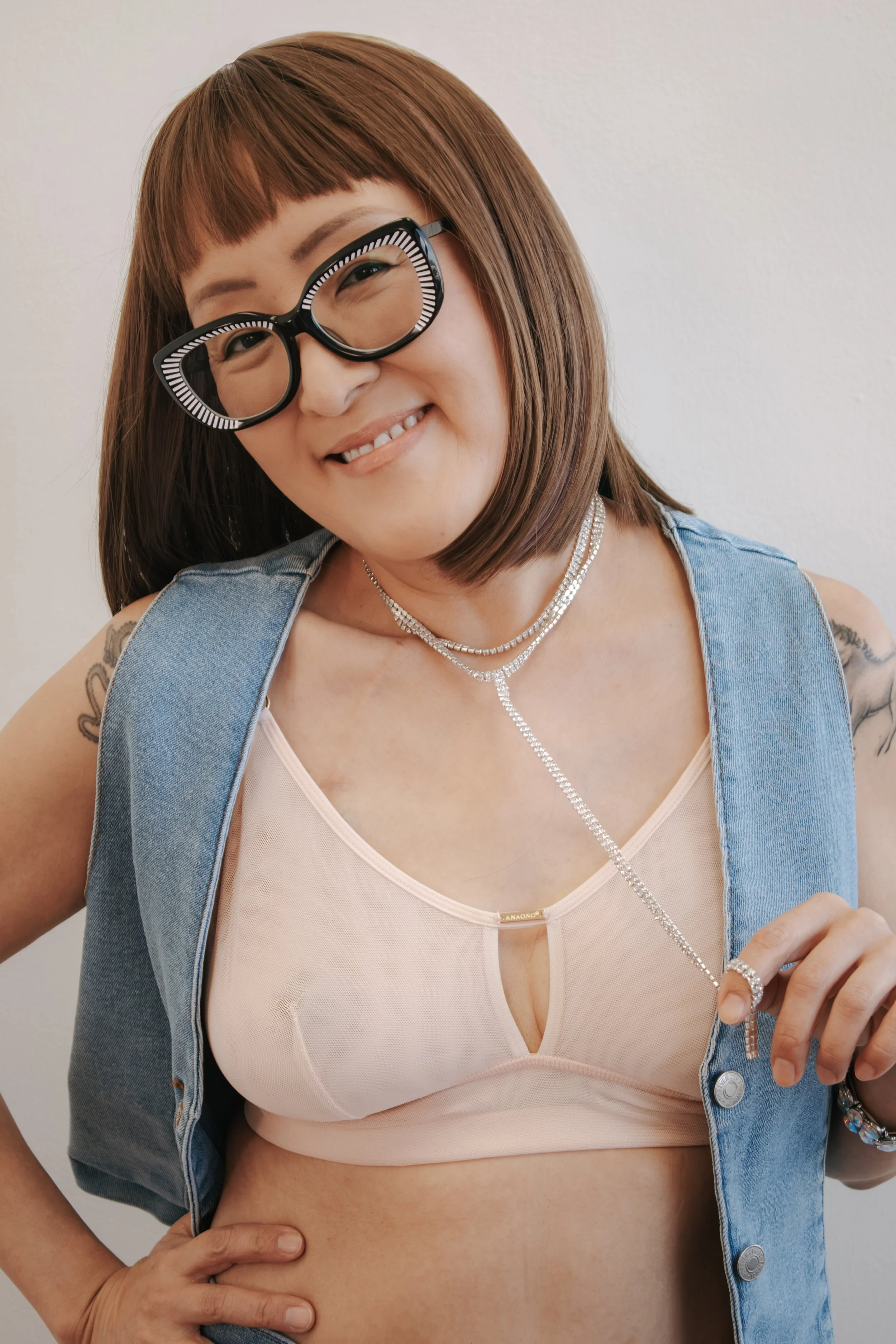
Meet Miya
In 2019, Miya was diagnosed with Stage III breast cancer.
She underwent extensive treatment, including a mastectomy, chemotherapy, radiation, and a hysterectomy recommended because her cancer was hormone-sensitive.
She did everything she could to treat her disease.
For several years, things were okay.
Then, in 2024, her cancer returned.
This time, it was Stage IV.
But Miya wasn't just facing a recurrence. She learned that her cancer had changed subtypes.
The disease she was now facing was different from the one she had originally been diagnosed with.
And that meant navigating a new and complicated treatment reality.

"It's Hard to Talk About It Right Now."
As part of our October collaboration with EPIC After, we brought six women affected by breast cancer together for an intimate roundtable conversation. Our goal was to create space for the realities that don't always make it into traditional breast cancer awareness campaigns. Miya was one of those women.
When it was her turn to share her story, she talked about her original diagnosis, the treatments she had undergone, and what happened when her cancer returned. Then she shared something incredibly difficult. She had recently experienced another progression.
"I'm so sorry, I just had a new progression, so it is hard to talk about it right now."
How often do we ask women affected by breast cancer to tell their stories through the lens of strength, resilience, and inspiration? How often do we expect them to have the right words? To find the positive? To make their experiences easier for the rest of us to hear?
Miya was sharing something painful and incredibly personal. She didn't need to apologize for that. Her story deserves to be heard exactly where she is in it. Not just when things are going well. Not just when there's something hopeful to report. And not just when the ending feels reassuring.
When Breast Cancer Comes Back Different
Metastatic breast cancer, also called Stage IV breast cancer, occurs when breast cancer spreads to distant parts of the body, such as the bones, liver, lungs, or brain.
While treatments can help control the disease, there is currently no cure for metastatic breast cancer.
And for some people, the cancer can change over time.
Breast cancer is often classified according to characteristics such as hormone receptor status and HER2 status. These characteristics help guide treatment decisions.
Sometimes, those characteristics differ between the original breast cancer and a metastatic recurrence.
For Miya, learning that her cancer had changed subtypes added another layer of complexity to her experience.
She had already undergone extensive treatment.
She had already made difficult decisions about her body and her health.
And now she was facing a disease that was behaving differently.
This is one of the many reasons continued metastatic breast cancer research is so important.
Researchers are working to better understand how breast cancer spreads, how it changes, why treatments stop working, and how to develop more effective therapies.
Because when cancer changes, treatment options need to keep advancing, too.
When Treatment Stops Working
For people living with metastatic breast cancer, treatment often involves ongoing therapies intended to control the disease, slow progression, manage symptoms, and extend life.
A treatment may work for months or years. But sometimes, the cancer progresses despite treatment. When that happens, the medical team may need to consider another approach.
Another medication. Another combination. Another line of therapy.
Miya shared that she had already experienced treatment failure and was preparing for additional radiation following progression. And this is where the conversation about research becomes deeply personal. Because when one treatment stops working, what comes next?
What if the next treatment doesn't work? What happens when the available options become more limited? These aren't hypothetical questions for people living with metastatic breast cancer.
They're questions that can shape their everyday lives. Their plans. Their relationships. Their futures.
More research means the possibility of more answers.
And more answers can lead to new treatment options, better disease control, improved quality of life, and more time.
Only 13%: The Metastatic Breast Cancer Research Funding Gap
Here's a statistic we wish more people knew.
According to METAvivor, from 2014 through 2020, only 13% of breast cancer research dollars were devoted to metastatic breast cancer research.
Thirteen percent.
While funding estimates vary depending on how research is categorized, the need for greater investment in metastatic breast cancer research remains urgent. Metastatic breast cancer is responsible for nearly all breast cancer deaths. Yet research specifically focused on metastatic disease has historically received a relatively small share of breast cancer research funding.
That gap matters.
Because understanding how cancer spreads is essential. Understanding why treatments stop working is essential. Developing new therapies for people whose cancers have progressed is essential. And people living with metastatic breast cancer need those advances now.
We cannot continue to talk about awareness without also talking about where research dollars are going.

Her Story Is Still Being Written
There's something we want people to understand about Miya.
She is so much more than her diagnosis.
She's a woman with a life, an identity, relationships, experiences, and a future that matters.
Her metastatic breast cancer is part of her reality.
But it is not the entirety of who she is.
And she deserves more than to be admired for how she handles an incredibly difficult diagnosis.
She deserves access to effective treatment.
She deserves research that prioritizes the disease she's living with.
She deserves more possibilities for what comes next.
Because her story is still being written.
And while no treatment can promise a particular outcome, research can help create options that don't exist today.
More treatments. More possibilities. More time.
That's what we're asking people to help make possible.
This October, Turn Awareness Into Action
October 13 is Metastatic Breast Cancer Awareness Day.
And while sharing stories and raising awareness are important, we want to encourage something more.
Help fund the research.
Here are two organizations doing meaningful work for the metastatic breast cancer community:
Reclaim October x The Breasties
Reclaim October challenges the traditional approach to Breast Cancer Awareness Month by encouraging meaningful action beyond pink ribbons and awareness campaigns.
Together with The Breasties, the movement supports research, education, advocacy, and resources for people affected by breast cancer.
The Breasties also invests directly in Stage IV research, including projects examining treatment resistance.
Support Reclaim October and The Breasties:
thebreasties.org/reclaim-october
Cancer Culture
Cancer Culture is a patient-led organization working to accelerate breakthroughs in metastatic breast cancer research.
Through storytelling, advocacy, and fundraising, the organization centers the voices of people living with metastatic disease.
Thanks to a private donor covering operating costs, 100% of public donations go directly toward metastatic breast cancer research.
Support Cancer Culture:
cancerculture.org
Both organizations are helping move the conversation beyond awareness and toward meaningful change.
Beyond the Pink Ribbon
At Perky, we believe the women affected by breast cancer deserve to be seen as whole people.
Not just patients.
Not just survivors.
Not just inspirations.
And not just the diagnoses they carry.
Through our Inspiring AND Desired collaboration with EPIC After, we're sharing conversations that explore the realities of breast cancer you don't always see, told by the women living them.
Miya's story is one of those realities.
It's not a story with a neatly packaged ending. It's a story unfolding right now. And that's exactly why it matters.
We hope you'll take a moment to listen to Miya. Learn about metastatic breast cancer. Share her story.
And consider supporting research that could help create more treatment options for people living with Stage IV disease.
Because awareness should lead somewhere. And for women like Miya, we hope it leads to more possibilities for what comes next.
With love,
Courtney & Crystal
Perky
