
"I Was Feeling Great." Then Everything Changed: Terri's Metastatic Breast Cancer Story
Imagine finally feeling like yourself again after breast cancer treatment. You've completed chemotherapy. You've undergone surgery. You've endured radiation. You're making plans for reconstruction. And then your oncologist calls. She asks you to pull over. That's how Terri's metastatic breast cancer story began.
And nearly eight years later, she's still living it.
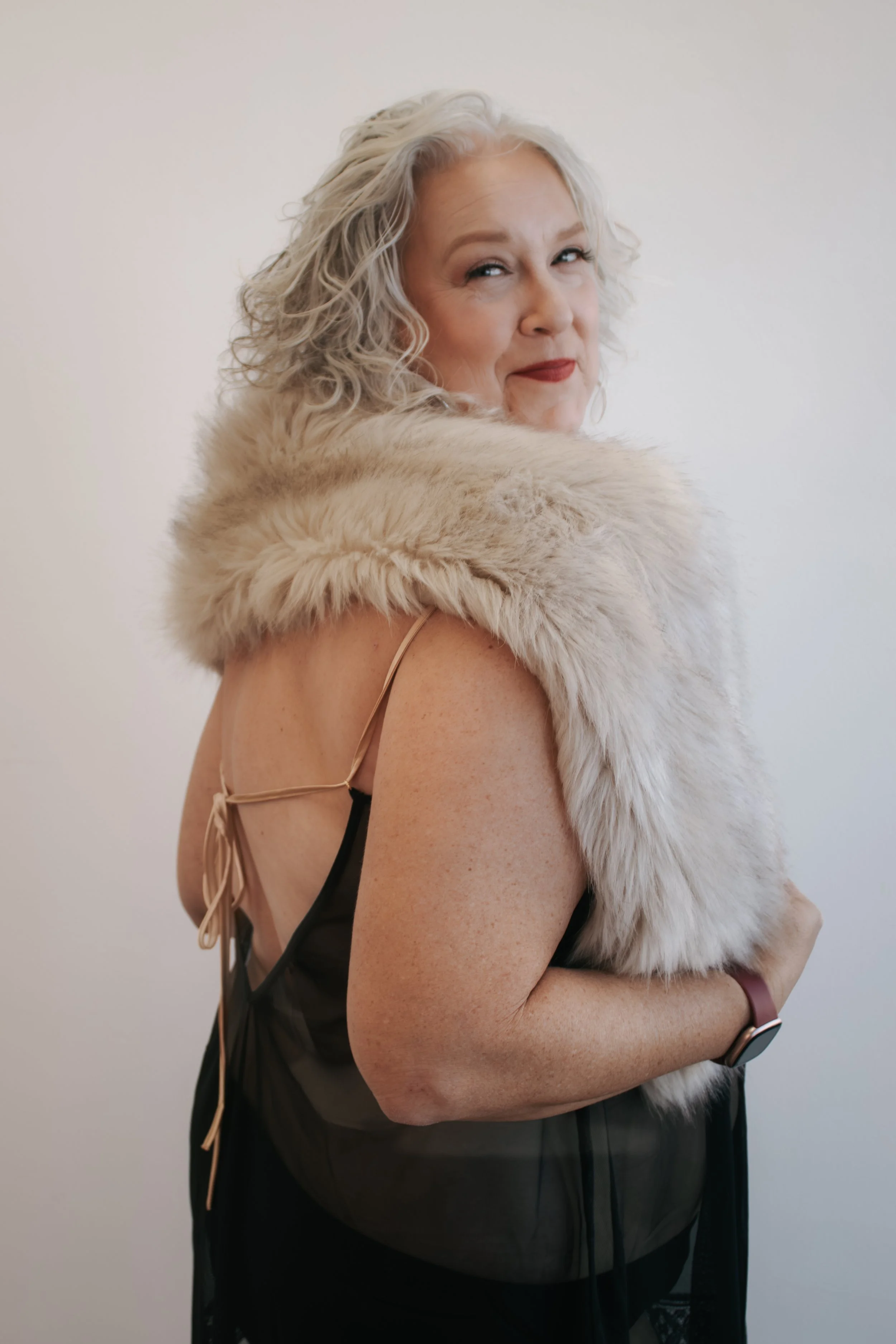
Meet Terri
In 2017, Terri was diagnosed with Stage IIB triple-positive breast cancer.
Triple-positive means her cancer was estrogen receptor-positive, progesterone receptor-positive, and HER2-positive.
Her treatment was extensive.
Six rounds of TCHP chemotherapy. A bilateral mastectomy. Removal of 40 lymph nodes from her left side. Forty radiation treatments. Continued HER2-targeted therapy.
She went through everything recommended to treat her cancer.
And eventually, she was told she was in remission. Terri was looking forward to the next chapter: delayed breast reconstruction.
She had received clearance to undergo DIEP flap reconstruction and decided to schedule her surgery around Thanksgiving break so she could take time off from work to recover.
She had plans. She was feeling good.
In fact, she remembers telling her oncologist:
"This is the best that I have felt."
But the phone call wasn't about clearing her for surgery.
The Phone Call That Changed Everything
Terri had just finished her preoperative appointment when her oncologist called. She assumed it would be a routine conversation. Instead, her doctor asked where she was and told her to pull over.
Something concerning had appeared in her lungs. She needed a CT-guided biopsy.
The results confirmed that her breast cancer had spread to her lungs. There were innumerable metastatic lesions.
Terri now had Stage IV metastatic breast cancer.
And suddenly, everything she had been preparing for changed. The week she was supposed to undergo breast reconstruction and have her port removed became the week she started chemotherapy again.
It was November 2018. Less than a year after her initial diagnosis, Terri was facing an entirely different reality.
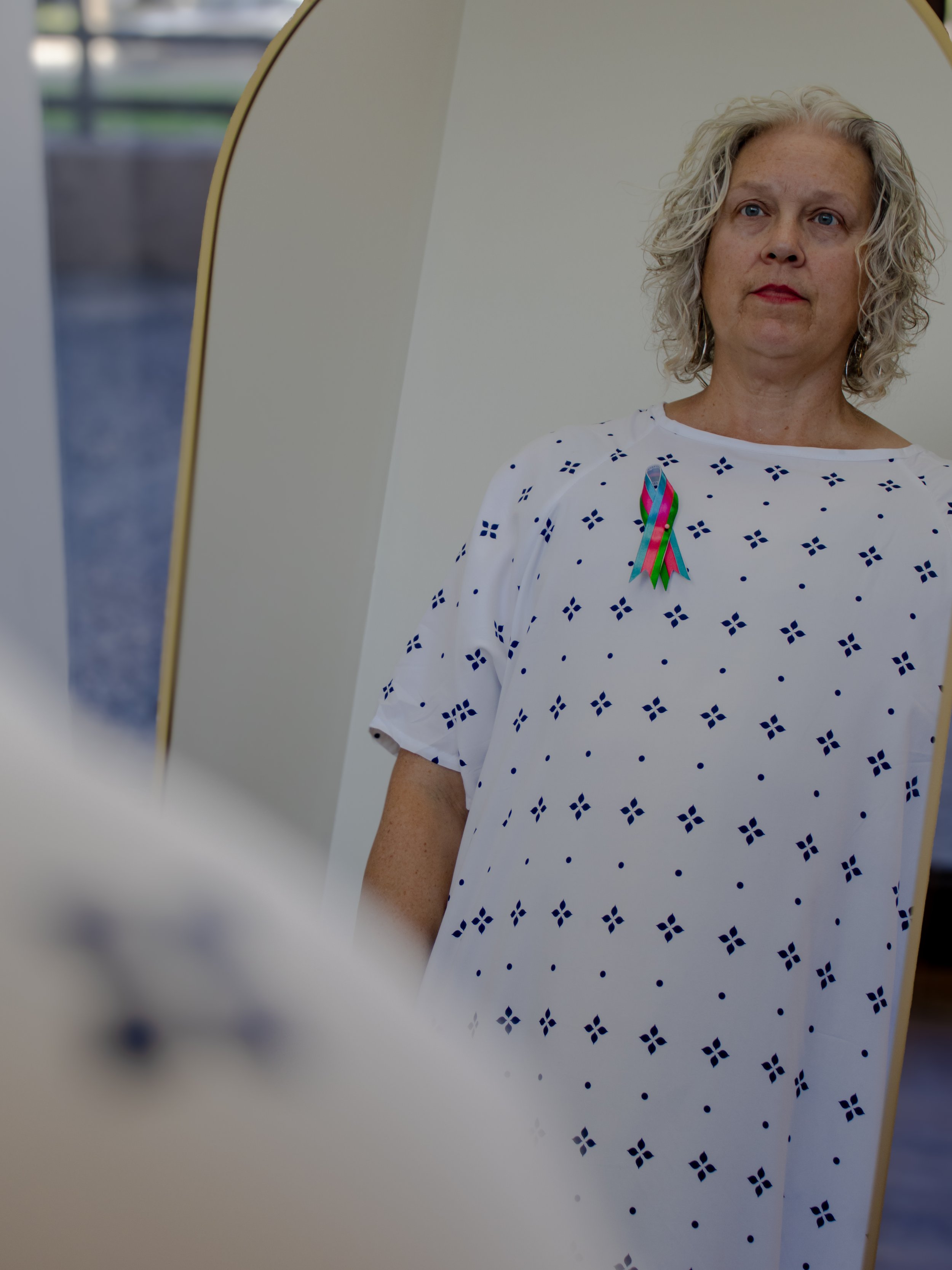
When Breast Cancer Doesn't Have an Ending
Metastatic breast cancer, also known as Stage IV breast cancer, occurs when breast cancer spreads to distant parts of the body.
For Terri, that meant her lungs.
Unlike early-stage breast cancer, metastatic breast cancer is currently considered incurable.
But incurable does not mean untreatable.
Treatments can help control the disease, slow progression, manage symptoms, and extend life.
For many people living with metastatic breast cancer, treatment continues indefinitely.
And over time, the disease may stop responding to medications that previously worked.
That means finding another treatment. And sometimes another. And another.
Terri knows this reality well.
Eight Years. Five Lines of Treatment.
Since her metastatic diagnosis in November 2018, Terri has navigated multiple treatment regimens.
Her first metastatic treatment included a medication she developed an allergic reaction to, requiring a change in therapy.
Other treatments followed. Today, Terri is on her fifth line of treatment.
She's currently taking an oral HER2-targeted therapy that has helped her maintain NEAD: no evidence of active disease.
And while that sounds like wonderful news, Terri wants people to understand something important.
NEAD does not mean cancer free.
"That Doesn't Mean I'm Cancer Free."
During our Inspiring AND Desired roundtable with EPIC After, Terri explained what living with NEAD actually means.
Her current testing shows no evidence of active cancer. Her medication is working.
But her metastatic breast cancer diagnosis hasn't disappeared. She still takes treatment. She still undergoes scans. She still lives with the possibility that her disease could progress.
Terri chooses to have imaging every four months because that's what feels right for her. And she hopes the medication she's currently taking continues to work for a very long time. But she also knows that maintaining NEAD today doesn't guarantee what will happen tomorrow.
This is a reality that often gets overlooked in conversations about breast cancer. People hear "no evidence of disease" and assume the story is over.
That everything is fine. That the cancer is gone.
But for people living with metastatic breast cancer, a good scan doesn't necessarily mean treatment ends. And a person can be doing well while still living with an incurable disease. Both things can be true.
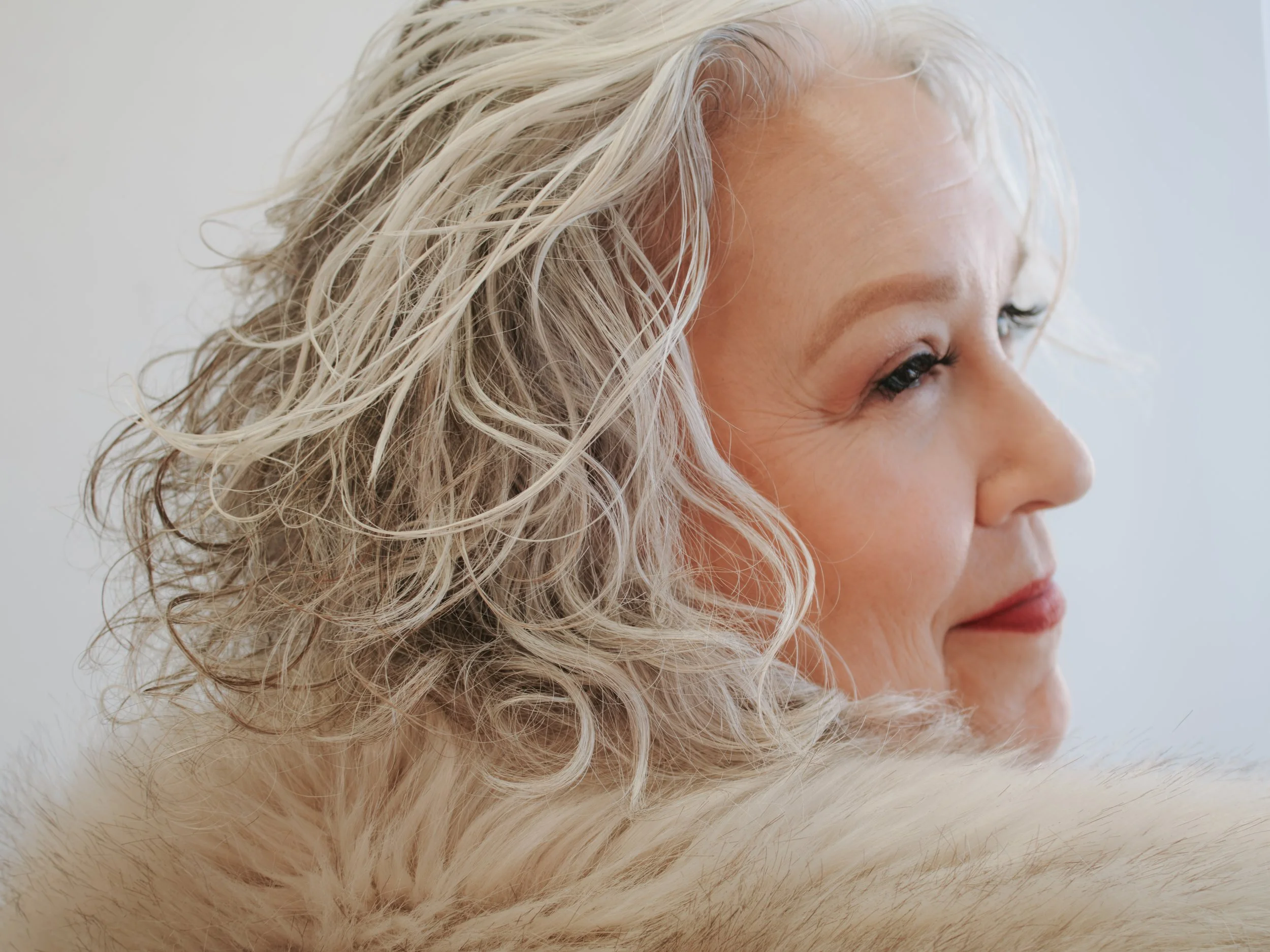
Why More Treatment Options Matter
Terri is approaching eight years of living with metastatic breast cancer.
That's eight years of ongoing treatment, monitoring, and navigating the uncertainty that comes with Stage IV disease.
And her story illustrates why continued research is so important.
Because the medication working today may not work forever.
And when a treatment stops controlling the disease, people need another option.
Researchers are studying how metastatic breast cancer develops resistance to treatment, how cancer cells change over time, and how new therapies can better target the disease.
These advances matter.
Not just for people newly diagnosed with metastatic breast cancer.
But for people like Terri, who have already moved through multiple lines of treatment.
More research can mean more treatment options.
More treatment options can mean more time.
And more time means more opportunities to live.
The Metastatic Breast Cancer Research Funding Gap
Every October, breast cancer awareness takes center stage. Pink ribbons appear everywhere. Businesses launch campaigns. Communities come together to celebrate survivors and raise awareness. But there's an important question we should be asking:
How much of that attention is translating into research for metastatic breast cancer?
According to research funding analyses shared by METAvivor and the Metastatic Breast Cancer Alliance, only 13% of breast cancer research dollars from 2014 through 2020 were devoted to metastatic breast cancer research.
Thirteen percent.
While this represented an improvement over previous years, the need for additional metastatic research funding remains significant. Metastatic breast cancer is responsible for nearly all breast cancer deaths. And people living with Stage IV disease need research that addresses their realities.
Treatment resistance. Disease progression. Quality of life. New therapies. And the possibility of living longer with metastatic breast cancer.
Awareness is important. But awareness alone doesn't develop new treatments. Research does.
This October, Turn Awareness Into Action
October 13 is Metastatic Breast Cancer Awareness Day.
And this year, we're encouraging our community to go beyond awareness and support the research that people living with Stage IV breast cancer urgently need.
Here are two organizations helping make that possible.
Reclaim October x The Breasties
Reclaim October is a movement challenging traditional Breast Cancer Awareness Month campaigns and encouraging meaningful action beyond pink ribbons.
In partnership with The Breasties, the movement helps raise funds for metastatic breast cancer research and programming that supports the Stage IV community.
The Breasties also funds research investigating why certain metastatic breast cancers become resistant to treatment.
Support Reclaim October and The Breasties.
Cancer Culture
Cancer Culture is a patient-led organization dedicated to accelerating breakthroughs in metastatic breast cancer research.
Through advocacy, storytelling, and fundraising, Cancer Culture amplifies the voices of people living with metastatic disease.
Thanks to a private donor covering operating costs, 100% of public donations go directly toward metastatic breast cancer research.
We Need More
Terri has spent nearly eight years living with metastatic breast cancer.
She's navigated multiple treatments. She's experienced the uncertainty of progression. And today, she's maintaining no evidence of active disease while continuing treatment.
Her story reminds us that living with Stage IV breast cancer doesn't look the same for everyone.
Some people are navigating progression. Some are responding well to treatment. Some are beginning their first line of therapy. Others are searching for their next.
Every one of them deserves more options.
Metastatic breast cancer research isn't just about what happens in a laboratory. It's about the people waiting for those breakthroughs.
People like Terri. People like Miya. And countless others whose stories are still being written.
This October, we hope you'll listen to their stories, share their realities, and consider supporting the research that could help give them more time.
More research. More treatment options. More possibilities.
Because their stories deserve to keep being written.
With love,
Courtney & Crystal
Perky
