
Stacy's Story | The Intimacy Issue | Perky x Happily EPIC After
We talk a lot about saving women's lives. But can we talk about their quality of life, too?
Breast cancer treatment can save a woman's life. But what happens when the treatments that help her survive also change her relationship with her body, her sexuality, and her ability to experience intimacy?
What happens when she finishes treatment, enters survivorship, and realizes that a part of her life she once took for granted may never feel quite the same?
And perhaps most importantly, why aren't we talking about it more?
For Stacy, these aren't hypothetical questions.
They're part of a reality she's been navigating for more than a decade.
And when she joined us for our Inspiring AND Desired campaign with EPIC After, she wasn't afraid to talk about it.
With honesty, vulnerability, and a perfectly timed sense of humor, Stacy opened up about the side of breast cancer survivorship that doesn't always make it into the awareness campaigns.
Sex. Intimacy. Desire. And the very real fear of never feeling sexy again.
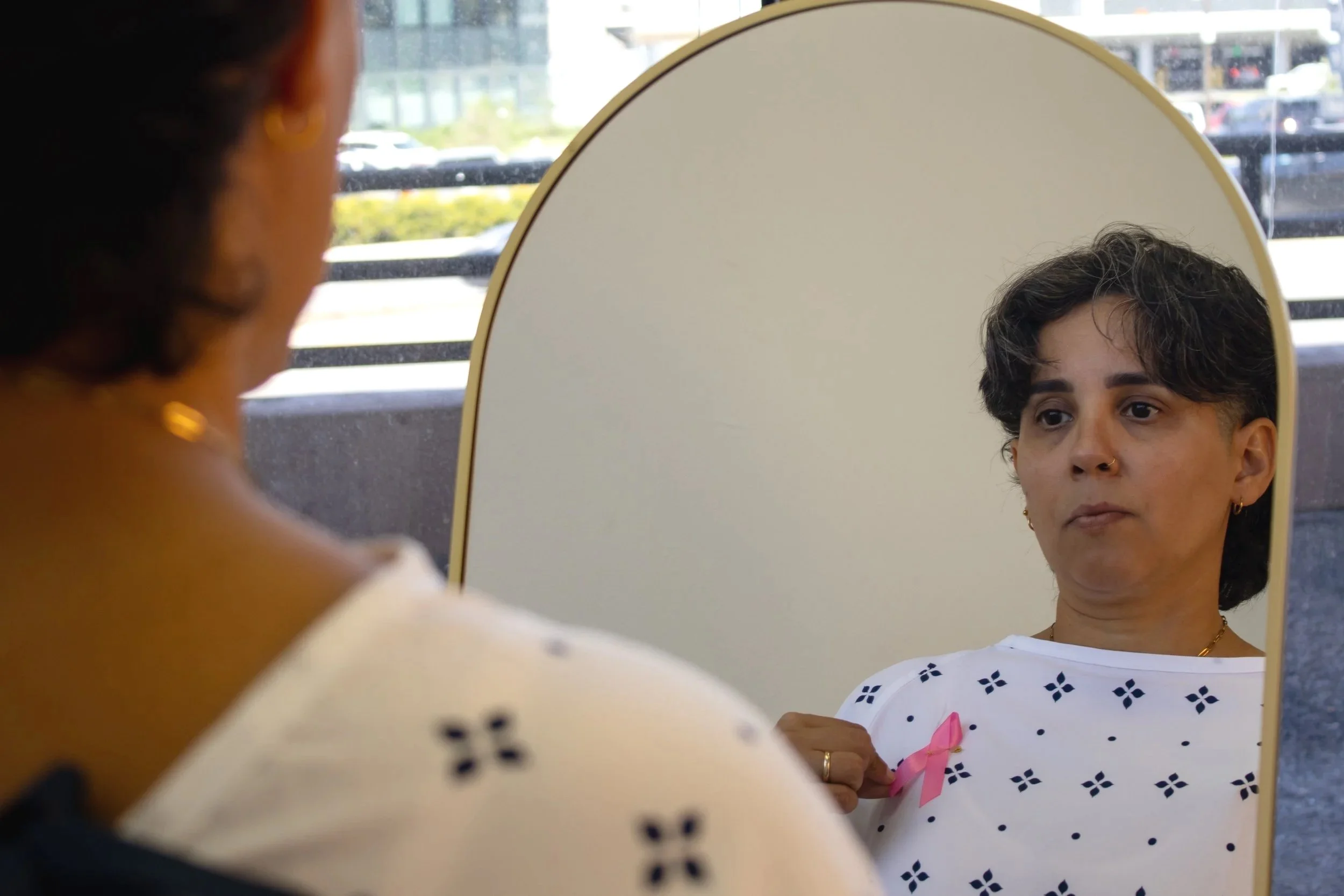
A Breast Cancer Diagnosis in Her Early 30s
In 2014, Stacy was diagnosed with stage III breast cancer in her early 30s.
Her treatment journey included chemotherapy, radiation, a bilateral mastectomy, and DIEP flap breast reconstruction.
A DIEP flap reconstruction uses skin, fat, and blood vessels from the lower abdomen to reconstruct the breast using a woman's own tissue rather than implants.
For Stacy, the surgeries didn't end there. She also underwent a hysterectomy as part of her efforts to reduce future cancer-related risks and improve her long-term outlook. These were significant medical decisions, made with the hope of protecting her future.
But like so many women navigating breast cancer, Stacy discovered that the impact of treatment extended far beyond the cancer itself. While the focus was understandably on helping her survive, there were other parts of her life that were changing, too.
Parts that weren't always as easy to talk about.
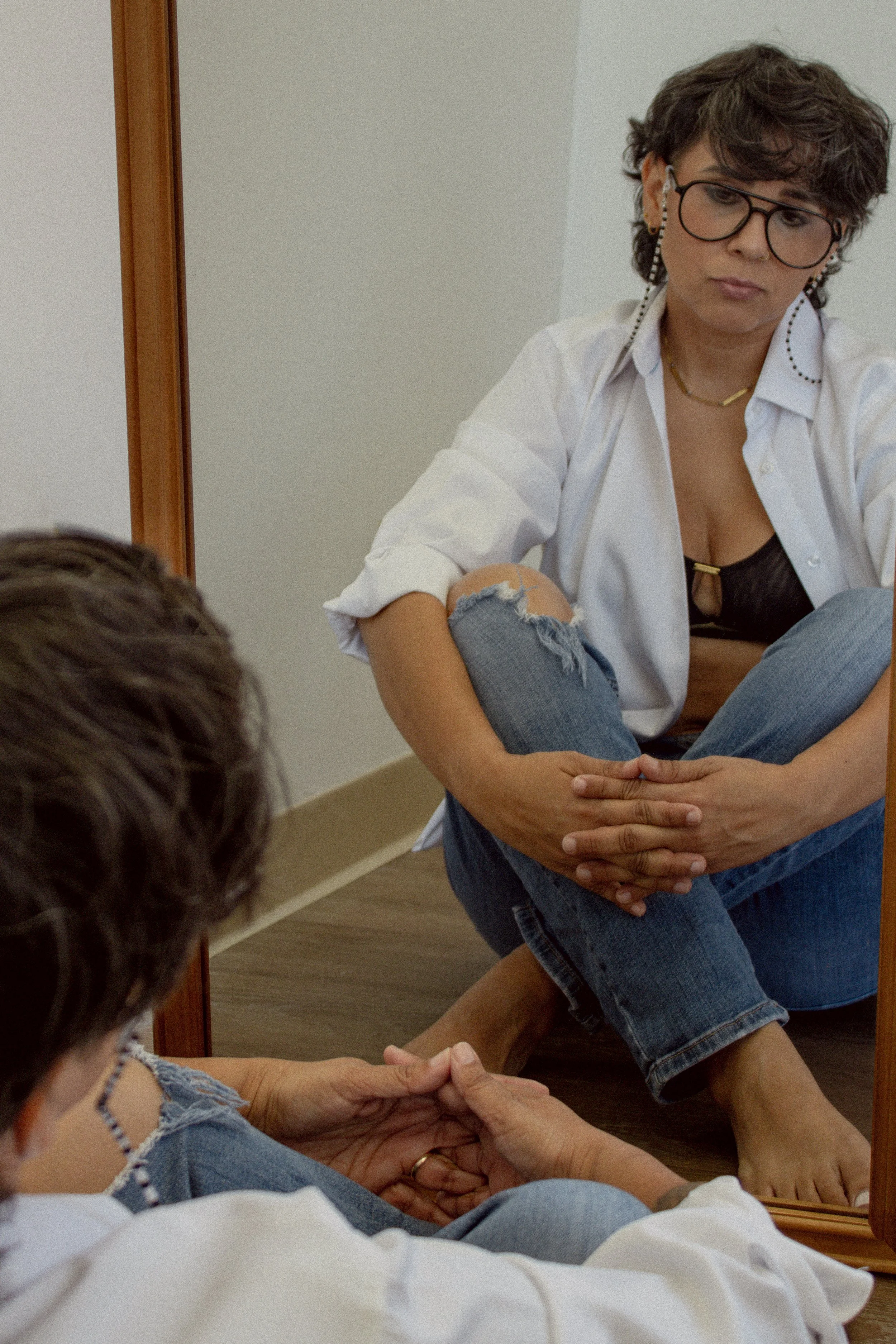
The Side of Survivorship Nobody Warns You About
When we talk about breast cancer treatment, we often focus on the physical effects we can see. Hair loss. Surgical scars. Breast reconstruction. Changes in appearance. But some of the most challenging effects are the ones that aren't visible.
Changes in sexual desire. Vaginal dryness and discomfort. Difficulty with arousal. Pain during intimacy. Changes in body image and sexual confidence. And the emotional weight of wondering whether sex will ever feel enjoyable, comfortable, or spontaneous again.
Cancer treatments can affect sexual health in several ways. Chemotherapy and certain hormone-related treatments may contribute to menopausal symptoms, while surgeries involving the ovaries can cause abrupt hormonal changes. The effects vary depending on the treatment and the individual.
For some women, these changes are temporary. For others, they can persist long after active treatment has ended.
And when the rest of the world is celebrating that you've survived cancer, it can feel difficult to speak up about the things you're still struggling with.
After all, you're alive. Shouldn't that be enough?
"Maybe I'm Just Never Going to Feel Sexy Again."
During our roundtable conversation, Stacy shared something that stopped us in our tracks.
"For me, it has been 12 years since my hysterectomy, and in those 12 years sometimes I feel like: okay maybe I'm just never going to have sex again, maybe I'm just never going to feel sexy again."
Not simply wondering whether sex will be different. But questioning whether you'll ever experience that part of yourself again.
Whether you'll ever feel sexy.
Whether you'll ever feel desired.
Whether intimacy will ever feel natural instead of something that requires planning, preparation, or discomfort.
These are questions that deserve real answers, compassionate support, and a place in conversations about breast cancer survivorship.
Sexual health isn't some frivolous concern that women should feel embarrassed to bring up.
Sexual health is health.
"Alexa, Set the Timer."
Perhaps one of the most memorable moments of our conversation came when Stacy described the options she was given for managing her sexual health concerns.
She explained that her doctors had told her she couldn't use hormone treatments. Instead, she recalled being offered a cream to apply approximately 30 minutes before having sex. And in true Stacy fashion, she delivered the perfect response:
"Alexa, set the timer."
What happens to spontaneity when intimacy requires a countdown? What happens when something that once felt natural becomes another thing to schedule, prepare for, or worry about? What happens when a woman who has already endured chemotherapy, radiation, and multiple surgeries is left wondering whether this is simply the best her sex life can be? And why do so many women feel like they're navigating these questions alone?
Stacy's humor gave us permission to laugh. But her experience gave us a reason to listen.
There May Be More Options Than Women Realize
It's important to recognize that sexual health care after breast cancer is not one-size-fits-all.
Some breast cancer survivors are advised to avoid certain hormonal therapies because of their cancer history or treatment plan. However, that does not mean every survivor has the same restrictions or that there are no other options.
Depending on individual circumstances, treatment approaches may include vaginal moisturizers, lubricants, pelvic floor physical therapy, sexual health counseling, and other nonhormonal interventions.
In some situations, carefully selected local hormonal treatments may also be considered through shared decision-making with a patient's oncology and gynecology teams.
The appropriate approach depends on a woman's diagnosis, treatments, symptoms, medical history, and personal preferences.
The takeaway isn't that one cream, treatment, or solution works for everyone.
It's that women deserve to know their concerns are valid, to understand the options that may be available, and to receive individualized support.
They deserve more than being told to simply live with it.
Why Don't We Talk About Sex After Breast Cancer?
Breast cancer awareness has become a major part of our culture.
Every October, we're surrounded by reminders to schedule mammograms, perform breast self-awareness checks, support research, and recognize the women affected by this disease.
These conversations are important.
But survivorship deserves attention, too.
And not just the parts that make for uplifting stories.
We need to talk about the uncomfortable things. The changes in sexual desire. The strain intimacy challenges can place on relationships. The fear of being rejected. The pressure to feel grateful when you're still grieving parts of your former life. The frustration of having symptoms that aren't always addressed during routine follow-up appointments. And the complicated relationship between feeling physically well enough for sex and emotionally ready to be intimate.
For some women, breast cancer treatment changes how they experience pleasure. For others, it changes how they see themselves. And for many, those experiences overlap.
Sexual health after cancer isn't just about intercourse. It's about comfort, connection, confidence, pleasure, bodily autonomy, and feeling at home in your own skin.
It's about being able to say, "This part of my life matters to me," without feeling selfish or embarrassed.

Inspiring AND Desired.
When we created our Inspiring AND Desired campaign in collaboration with EPIC After, we wanted to challenge the way women affected by breast cancer are so often portrayed. We celebrate their strength, resilience, and ability to endure unimaginable circumstances. But, the woman behind the diagnosis is still a woman.
She may still want romance. She may still want passion. She may still want to feel attractive, sensual, confident, and wanted. She may want to rediscover intimacy with her partner or explore what sexuality means to her now. Or she may not want sex at all—and that experience deserves respect, too.
There is no single definition of femininity, sexuality, or what a fulfilling life after cancer should look like. But every woman deserves the opportunity to define those things for herself.
Being inspiring should never mean being seen as less desirable. And surviving breast cancer should never mean that concerns about sexual health are pushed to the bottom of the priority list. That's why Stacy's story is so important to this campaign. She reminds us that the conversations we avoid are often the ones women most need us to have.
What About the Woman Behind the Treatment?
Imagine spending months or years focused on keeping your body alive. Appointments. Scans. Surgery. Recovery. Medication. Follow-ups.
Your body becomes something that is examined, monitored, treated, and discussed in medical terms. And somewhere in the middle of all that, it can become difficult to remember that your body is also yours.
A body that deserves comfort. A body that can experience pleasure. A body that deserves affection and connection. A body that belongs to a woman whose needs extend far beyond her diagnosis.
At Perky, we see this intersection between physical restoration and emotional healing every day. Through restorative nipple-areola tattooing and scar camouflage, we meet women who are navigating the relationship between their changed bodies and their sense of self. For some, restoration is about feeling whole again. For others, it's about confidence, intimacy, or simply wanting to recognize themselves in the mirror.
And while restorative tattooing isn't a treatment for sexual dysfunction, these conversations remind us that body image and sexuality can be deeply connected.
Women deserve to feel seen as whole people—not just patients whose treatment has ended.
Survival Is the Goal. Quality of Life Matters, Too.
Stacy's story raises a question we hope more people will start asking:
We talk about saving women's lives. Can we talk about their quality of life, too?
Survivorship is not simply the absence of cancer. It's living with the physical, emotional, and psychological effects that cancer and its treatment may leave behind. It's navigating relationships. It's adjusting to changes in your body. It's finding support when something doesn't feel right. And sometimes, it's asking questions about sex that you never imagined you'd need to ask.
These conversations shouldn't be reserved for a private moment of frustration or a whispered confession between friends. They belong in medical appointments. They belong in survivorship care. They belong in conversations between partners. And they belong in breast cancer awareness campaigns. Not because every woman will have the same experience. But because every woman deserves to know she's allowed to talk about hers.
Let's Keep the Conversation Going
One of the most meaningful parts of our Inspiring AND Desired campaign has been sitting down with six women affected by breast cancer and hearing the realities that don't always make it into traditional awareness messaging.
Some of those conversations have been emotional. Some have been difficult. Some have made us laugh. And some, like Stacy's, have reminded us just how much there is left to talk about.
We hope sharing these stories encourages women to ask questions, seek support, and feel less alone in experiences that are far more common than many realize. And we hope it encourages healthcare professionals, partners, friends, and loved ones to listen. Supporting someone through breast cancer shouldn't stop at helping them survive.
It should include caring about the life they're living afterward.
Stacy said it best:
"Alexa, set the timer."
A little humor. A lot of truth. And a conversation that's long overdue.

Watch Inspiring AND Desired: Step Into Her Reality
Stacy is one of six women featured in Perky x EPIC After's Inspiring AND Desired campaign, an exploration of identity, intimacy, body image, survivorship, previvorship, and life with metastatic breast cancer. Through our documentary, Step Into Her Reality, we're giving these women space to share the experiences that exist beyond the pink ribbon.
You know the ribbon. Now, get to know the women behind it.
